See a covenant breach a quarter before the bank does
The compliance certificate is due a few weeks after quarter-end. The controller prepares it the way it has always been prepared: close the quarter, compute EBITDA for the trailing twelve months, take net debt at the test date, divide. This time the ratio comes out uncomfortably close to the limit in the facility agreement. The CFO has a few days to decide whether to call the bank, and every lever that might have helped — timing a capital expenditure, pushing collections, deferring a dividend — needed pulling two months ago.
Nothing about the business was hidden. The ratio was simply computed once a quarter, after the fact, from a definition that lived in a PDF.
The real cause: covenants lag by construction
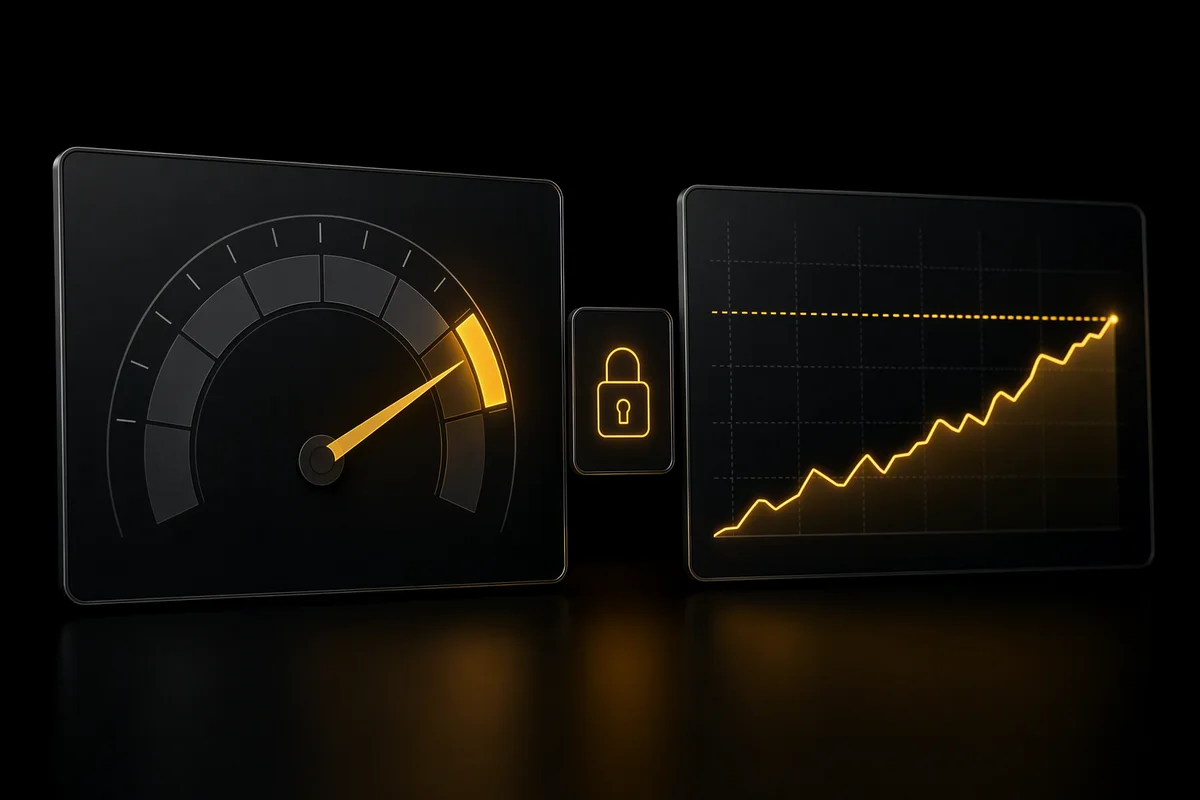
Financial covenants are typically tested at quarter-ends, on trailing twelve-month figures, with the certificate delivered after the close. Each of those design choices makes the ratio a lagging number. Watching it as reported is like driving with a speedometer that updates once a quarter.
The fix is not a better calculation of last quarter. It is a forward view: the covenant computed on the forecast, for each of the next several test dates, with the headroom expressed in money.
Where covenant monitoring fails
Accounting EBITDA instead of covenant EBITDA. The facility agreement usually defines its own EBITDA, with specific add-backs, exclusions and treatment of leases or one-off items. Computing the ratio on the management-accounts figure can put you on the wrong side of the line without anyone noticing.
Forgetting what leaves the window. A trailing twelve-month figure changes in two ways: a new quarter comes in and an old one drops out. A strong quarter from last year leaving the window can tip the ratio even when the current quarter is fine.
Net debt at the wrong moment. Covenants usually look at net debt on the test date. In a seasonal business, cash at quarter-end can differ sharply from cash two weeks either side, and the timing of large payments around that date matters more than any monthly average.
Currency on the debt side. If borrowings are in a different currency from earnings, an exchange-rate move shifts the ratio without any change in the business.
Headroom as a ratio, not as money. “Close to the limit” is hard to act on. “EBITDA can fall by this much, or net debt can rise by that much, before the test fails” is a number an operating team understands.
What to do instead
- Encode the definitions once, from the agreement. Turn each covenant into explicit rules — which accounts, which add-backs, which test dates — checked by whoever negotiated the facility. After that, the calculation runs from ERP data without anyone rereading the PDF.
- Compute it forward. Run the covenant on the rolling forecast for each of the next four test dates. The forecast has to be good, which is why cash forecasting and covenant monitoring belong together — see why your 13-week cash forecast keeps missing.
- Show headroom in money and in time. For each test date: how far EBITDA can fall, how far net debt can rise, and how many weeks remain to act.
- Set a warning band above the limit. Not an alert when the ratio breaches, but a warning when forecast headroom drops below a level you chose in advance. That is the difference between a dashboard and a control loop, argued in the autonomous CFO is not a dashboard.
- Run the downside. Combine the covenant with a few simple scenarios: the largest customer paying a month late, a key input price rising, the currency moving against you. If one plausible scenario breaches, you want to know now, not at quarter-end.
The conversation with a lender also changes when it starts early. Arriving with a forward view, the drivers and a plan is a different meeting from arriving with a certificate already close to the line. How the bank responds is its decision. Giving it time to respond is yours.
A test you can run today
Open the facility agreement and find the financial covenants and their definitions. For the next test date:
- Identify which quarter drops out of the trailing twelve-month window, and how much EBITDA it contributed.
- Using your current forecast for this quarter, estimate the ratio at the test date.
- Express the headroom in money: how much lower could EBITDA be before the limit is reached?
If step three takes more than an hour, or nobody on the team is sure which EBITDA definition applies, the covenant is being watched after the fact. Watching that headroom every night, from the ERP and the forecast, with the reasoning attached, is part of what ObserBI is being built to do — on your own infrastructure.
- covenants
- bank financing
- early warning
- EBITDA